By Sanjo, Author of The Resilience Response
Today, as we pause to honour World Mental Health Day, let’s remember — mental well-being is not just about coping, but about thriving with awareness, purpose, and inner peace.
In ‘The Resilience Response’, I have shared that resilience is not a personality trait; it’s a daily practice — one that helps us navigate uncertainty with calm, compassion, and clarity.
Here are science-backed, psychology-informed, and NLP-inspired strategies to uplift your inner world and nurture mental well-being — not just today, but every day.
Begin with Self-Awareness — Your Inner Compass
“You can’t change what you don’t notice.” Start by tuning into your inner world.
According to Cognitive Behavioural Psychology, awareness of emotions is the first step to self-regulation.
Try this practice:
- Pause three times a day and ask: “What am I feeling right now?”
- Label your emotions — calm, anxious, hopeful, tired etc.
- Naming emotions activates your brain’s reasoning centre and reduces emotional overload.
Recognising this awareness gap — the sacred space between stimulus and choice where growth begins.
Reframe Your Thoughts — The NLP Way
The language you use shapes the reality you experience.
When you say, “I’m stuck,” your brain freezes in limitation. When you say, “I’m pausing to find direction,” your brain opens neural pathways of creativity and hope.
Practice the Reframe Technique:
Catch your negative internal dialogue. Ask: “What else could this mean?” Replace “I have to” with “I choose to.”
A small linguistic shift changes your physiology — lowering stress hormones and activating solution-focused thinking.
Anchor Positive States
In Neuro-Linguistic Programming (NLP), anchoring helps you link emotional states to physical triggers — allowing you to summon calm or confidence instantly.
How to create your anchor:
- Recall a moment of deep peace or joy.
- Feel it fully — sights, sounds, sensations.
- As the emotion peaks, press your thumb and forefinger together.
- Repeat daily.
Soon, that physical gesture becomes your calm trigger — a neurological shortcut to composure.
Design Your Environment for Mental Fitness
Your surroundings influence your mood more than you realize. Behavioural science calls this environmental design.
Practical shifts:
- Keep a gratitude note on your work desk.
- Declutter your space to clear mental fog.
- Add natural light, plants, or calming visuals.
When your environment reflects your intentions, your mind follows with ease.
Build Micro-Routines to Rewire Your Brain
Neuroscience shows that small, repeated actions create new neural patterns — the basis of habit and healing.
Micro-habits that nurture mental well-being:
- 60-second reset: Take 5 deep breaths every hour.
- Evening reflection: Write one lesson or gratitude note daily.
- Morning stretch: Move your body while affirming, “I am grounded and growing.”
Tiny actions done consistently lead to long-term transformation.
Find Meaning in the Mess
Positive Psychology reminds us that humans thrive when they can find meaning in adversity.
Instead of asking “Why me?”, try asking: “What is this teaching me?” “How can I grow from this?”
As I write in The Resilience Response, meaning turns pain into purpose. It’s how challenges transform into catalysts.
Strengthen Connection — Your Emotional Immune System
Humans are wired for connection. Social neuroscience reveals that positive interactions release oxytocin, the hormone that calms and heals.
Daily connection rituals:
- Offer one genuine compliment a day.
- Have one device-free conversation.
- Do one act of kindness — it boosts serotonin for both giver and receiver.
Relationships are not just emotional support — they are biological medicine.
Cultivate Stillness and Spiritual Alignment
Stillness isn’t the absence of activity — it’s the presence of awareness.
Meditation, prayer, or quiet reflection activates the parasympathetic nervous system, reducing anxiety and restoring clarity.
Stillness is the pause between thought and reaction — the space where wisdom is born.
In Essence
This World Mental Health Day, remember: mental well-being isn’t a destination — it’s a daily practice. It’s how we respond to the small moments that shapes our peace, strength, and purpose.
In a world that constantly pushes us to adapt, achieve, and appear strong, resilience isn’t about becoming someone new — it’s about coming home to your truest self. Each breath offers a moment of renewal, a pause to realign with your inner calm, and a chance to rise again — softer, wiser, and more grounded.
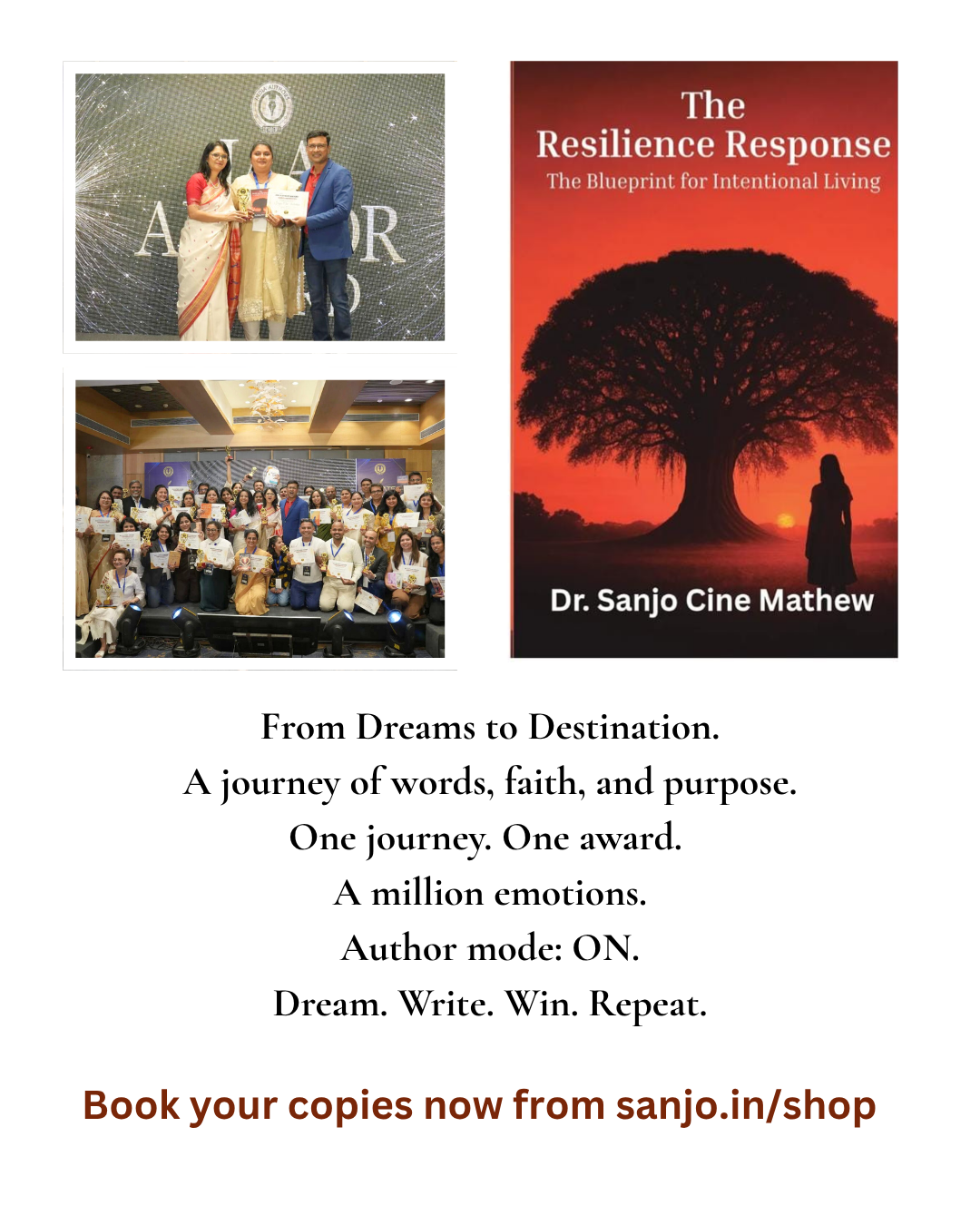
Read “The Resilience Response” to rediscover your strength — not in resistance, but in returning to yourself.